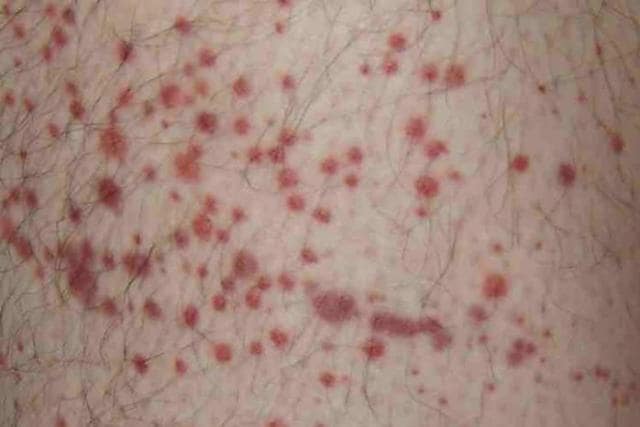
An ingrown hair on vagina, vulva or vaginal lips (labia minora or majora) can cause discomfort and severe pain. Usually, it triggers lesions such as cysts and painful bumps, boils or pus-filled blisters, especially when it gets infected. Hence, it can be easily mistaken for other health conditions such as STDs. This post explores pictures, causes, signs and symptoms of vaginal ingrown hairs. Furthermore, it highlights how to get rid of and prevent them with treatments and home remedies.
What Is Ingrown Hair on Vagina?
An ingrown hair refers to hair that is trapped and grows beneath the skin. This can happen on any part on the skin that grows hair. However, an ingrown hair tends to develop more on areas that have a soft skin and thick coarse and curly hair.

Ingrown hairs on vagina can develop on the vulva (the opening of the vagina), especially on the labia (vaginal lips). Normally, it grows on the outer vaginal lips (labia minora), but it can also develop on the inner vaginal lips (labia minora).
Also, vaginal ingrown hair can also develop near the vagina or around the vaginal area. This includes especially the pubic area (the region above the vagina). However, it can also show up in the groin and the perineum region (the area between the vagina and the anus).
Like any other, an ingrown hair on vagina is basically harmless medically. Nevertheless, it may cause serious discomfort, especially in terms of pain and itchiness. Besides, it can be cosmetically disfiguring as it may cause scarring, skin discoloration, bumps, and rarely keloid scars.

Signs and Symptoms of Ingrown Hair on Vagina
When you develop ingrown hairs on your vagina, your body will respond to the presence of the hair under the skin in various ways. In case the ingrown hair develops an infection, the signs and symptoms will become worse. Here are the typical signs and symptoms of vaginal ingrown hair
- Itchy skin near or around the vagina
- Pain and Swelling on vaginal area
- Redness especially around the affected hair
- Cysts, often deep, around the affected hair on the vagina or the vaginal lips
- Fluid-filled blisters, often painful, may show up on the around the vagina
- Hard and usually painful bumps on labia minora or majora or around the vagina
Basically, the signs and symptoms of ingrown hair on vagina resemble those of many other vaginal health problems. Therefore, you should be careful not to mistake them for the other conditions or vice versa.
Ingrown Hair on Vagina Pictures
We have inserted a few pictures of ingrown hairs on the vagina and their symptoms. You may use them to get an idea of your vaginal problem. However, you should not use the images for self-diagnosis. Instead, visit your doctor for definitive diagnosis and proper treatment.
Causes of Ingrown Hair on Vagina
Most commonly, an ingrown hair develops when hair is trapped under the skin inside the hair follicle. This especially happens as the hair regrows after hair removal by shaving, waxing, or tweezing.

However, on rare occasions, an ingrown hair around the vagina can develop outside the hair follicle. This happens when hair curls and grows back into the skin, especially adjacent to the hair follicle involved.
Rarely, you may get a deep ingrown hair on vagina if the hair shaft curls and grows deeper into the skin. However, most of the ingrown hairs develop close to the skin. If it stays for long and ingrown hair might form a long, coiled strand of hair under the skin.
Different factors can lead to the development of ingrown hair around the vagina. These include various practices as well as nature of your skin and hair. Here are the common causes and risk factors on ingrown hairs on vagina.
1. Blocked or Clogged Hair Follicle
The hair follicles may get blocked or clogged when dead skin and body oils and secretions combine and accumulate on the skin. This may constrain a growing hair shaft within the hair follicle. Chances of having clogged hair follicle on the vagina increase with hormonal changes and lack of exfoliation
2. Poor Shaving Practices
Mostly, an ingrown hair on vagina occurs after hair removal. In fact, most women have at one time had an ingrown hair as a result of hair removal. Some of the common hair removal practices and techniques that encourage ingrown hairs on vagina include:
(a) Failure to prepare the hair for Shaving
Failure to clean the vaginal area before shaving may encourage infections. Similarly, if you do not wash the hair and lubricate the area, there will be irritation and tugging and pulling as you shave.
(a) Pulling the skin taut
This encourages shaving too close to the skin. When the taut skin is released, the hair draws back into the hair follicles. As it grows back, it may grow sideways especially if it is coarse and curly.
(b) Breaking the hair unevenly
The sharp tip of the hair that remains may easily penetrate skin within the hair follicle wall or on the adjacent skin area. Hair removal by waxing or epilating may cause hair breakages within the hair follicle.
(c) Tagging and pulling the hair
This usually happens when you shave with a blunt shaver or without lubricating the shaving tool or the skin. As a result, the skin gets irritated and swollen and this encourages ingrown hair.
(d) Pulling the shaver at the skin
This encourages cutting the hair too close to the skin. When you release the pulling, the hairs may retract into the hair follicles. As the hair grows back, it may easily get trapped within the hair follicle in case it grows sideways.
(f) Failure to give aftershave care
This means you do not wash the area and apply an appropriate aftershave. As a result, the irritated hair follicles may remain clogged or blocked by dirt and dead skin and oils.
3. Nature of Hair
The quality of your genital hair may also influence the development of ingrown hair on vagina. The problem of ingrown hairs on vagina tends to occur more in women with curly and coarse hair.
Clearly, it is because this kind of hair is more likely to coil within the hair follicle or curve back to the skin. Usually, this happens after hair removal by shaving, waxing or tweezing.
In addition, studies show that having excessive hair genital hair increases the likelihood of developing ingrown hairs. Normally, the excessive hair develops due to high levels of certain sex hormones.
4. Nature of Skin
Having a sensitive skin may also contribute to ingrown hairs on vagina, vulva or vaginal lips. With sensitive skin, hair easily irritates it, particularly as it regrows after removal. In response, the skin develops papules or pustules above the hair follicles.
Similarly, an oily skin produces excessive body oils and other secretions. Naturally, the secretions may combine with the dead skin to block or clog the hair follicles.
In either case, most of the hair shafts will successfully grow up out of the skin. However, some of them are likely to be trapped under the skin and lead to ingrown hairs.
5. Hormonal Changes During Periods or Pregnancy
Change in level of certain sex hormones may also contribute to ingrown hairs on vagina. This especially occurs during periods or pregnancy, though it may also occur when you have prolonged stress. Usually, the hormonal changes led to excessive production of body oils and secretions that may clog the hair follicles. However, they may also trigger an increase hair growth, which also increases chances of ingrown hairs.
6. Inadequate Exfoliation
Naturally, the skin exfoliates itself. However, the natural exfoliation is often inadequate, especially for certain individuals.
Insufficient natural exfoliation and lack of an artificial one that the dead skin and oils will accumulate on the skin. These may constrain growing hair under the skin leading to ingrown hairs.
7. Body Care Products
Some of the body cleansing, cosmetic and conditioning products may block and clog the hair follicle around the vagina and encourage ingrown hairs. For example, using ordinary bar soap instead of toilet soap may lead to ingrown hairs in some individuals.
8. Wearing Tight Clothes
In case you use tight-fitting pants or underwear, especially after shaving your vaginal area, you may develop ingrown hairs.
The tight fabric against your skin causes rubbing and undue pressure on the hair follicles. Occasionally, this may cause some of the hair shafts to curl back instead of growing upwards.
Ingrown hair on Labia Minora or Majora
It is possible to get ingrown hair on your labia(vaginal lips). Usually develops on the labia majora (the outer vaginal lip), which has genital hair. However, it can also develop on the labia minora (inner vaginal lip) if your genital hair extends there, but this is rare.
Ingrown hair on labia can easily be confused with other conditions like vulval cysts and or STD bumps. You need to be careful or see your gynecologist to rule out other conditions, which may be medically harmful.
Complications of Ingrown Hair on Vagina
Various medical conditions may accompany ingrown hairs on the vagina and make them worse. Such conditions are primarily triggered by the irritation caused by the ingrown hairs. The common ones include:
- Infection: Vaginal ingrown hairs may lead to an infected ingrown hair on the vagina. The irritation due to the ingrown hair exposes the skin to bacteria. As a result, the bacteria gain entry into the skin, thereby infecting it.
- Cysts: You may develop an ingrown hair cyst on your vagina. This is a harmless but disfiguring sac-like structure that contains a fluid. Normally, the cyst develops around the affected hair and it may be shallow or deep.
- Boils: An ingrown hair boil (abscess) may develop on your vagina as a result of vaginal ingrown hair. The ingrown hair may cause severe irritation that makes the skin susceptible to the bacteria that causes boils.
- Scarring: You may get permanent ingrown hair scars in form of keloids on your vagina. Usually, this happens when the ingrown hair causes serious irritation that damages the skin significantly. The scar develops as the body tries to repair this damage.
- Razor bumps: Also known pseudofolliculitis, razor bumps are common lesions that may appear on any part of the skin after hair removal. Vaginal razor bumps constitute one of the many different types of bumps on vagina.
Conditions Similar to Ingrown Hair on Vagina
Occasionally, other vaginal conditions that have signs and symptom similar to those of ingrown hair may show up. They may be mistaken for ingrown hairs, especially if they coincidentally appear after you have shaved. Some of these conditions include:

- Acne in form of pimples (papules and pustules), whiteheads or
- Vaginal or vulvar cysts
- vagina abscess (boil)
- Impetigo on vagina – a highly contagious skin infection that primarily affects children
- vaginal eczema
- Heat rash (prickly heat)
- Genital psoriasis (pustular)
- Molluscum contagiosum on vagina – a highly contagious viral infection
- Other bumps or sores on vagina, including STD Bumps such as genital warts and genital herpes
- Very rarely, skin cancer lesions
How to Get Rid of Ingrown Hair on Vagina
Generally, ingrown hair on vagina will go away on its own, without any treatment. However, it may be necessary to treat them in case they are causing severe symptoms or they develop an infection. You may also want to get rid of them quickly.
As a general rule, never scratch, pick at, squeeze, pull or pluck an ingrown hair, especially with your dirty hands. Ths will only irritate it and cause scarring or an infection.
Various medical treatments, over-the-counter medications and home remedies help to heal them faster. However, you can get rid of vaginal ingrown hairs even faster by pulling them out of the skin with an appropriate removal tool.
Home Remedies
1. Warm Compress
Apply a warm compress using a towel for 10 minutes several times. This will soften up the skin and loosen the pores to release the ingrown hair. As a result, redness and swelling will subside because the hair is free. Instead of water and a towel, you may use warm milk and a piece of bread to apply the compress.
2. Cleansing and Exfoliating
Wash the affected area with a mild cleanser. Thereafter, exfoliate the area with a washcloth or soft toothbrush in a circular motion and in different directions repeatedly. This will remove dirt and dead skin and possibly dislodge the tip of the trapped hair
4. Other Home Remedies
Apply the following remedies twice or thrice a day to reduce inflammation and clear infections. This may reduce ha swelling and inflammation and thereby open the way for the trapped hair to grow upward from the skin.
- Tea tree oil: To kill bacteria reduces redness and inflammation
- Turmeric: To reduce inflammation. You can also take it orally for general inflammation relief.
- Baking soda: To exfoliate the skin and bring down the inflammation
- Evening primrose oil: To reduce inflammation
- Fenugreek: Make a paste from its seeds and apply it to reduce inflammation and swelling.
- Sugar is a natural exfoliator: Mix honey and olive oil to moisturize the skin and kill bacteria
How to Remove Ingrown Hair on Vagina
- Cleanse and exfoliate the area and apply topical medications. This will soften the area reduce inflammation. In case it has a pus-filled blister, peel the scab and push out the pus.
- Apply a warm compress to further soften the area. In case it is a deep ingrown hair and you can’t see its tip, exfoliate more and apply more compress and topical medications.
- With a sterile tweezer or needle, slowly tug at the loop of the hair until it is released. In case you are unable to remove it, give it more time and try again later. Don’t dig into the skin because you might expose the area to bacteria.
- Finally, treat the area. Wash it with warm water and moisturizing soap. Apply anti-inflammatory cream such as aloe Vera which is also an antiseptic. Apply a topical antibiotic in case of an infection.


How to remove an ingrown hair with tweezers
Medical Treatment
1. Over-the-counter Medications
Apply the following medications on the ingrown hair twice or thrice a day or as you are advised
- Benzoyl peroxide cream can help dry up the area and reduce redness and inflammation an set the trapped hair
- Salicylic acid cream can help release dirt and blocking substances to free the ingrown hair
- Moisturizer. A non-greasy moisturizer can help get rid of dead skin and secretions
- Fading creams with 2% hydroquinone may help to improve any persistent discoloration.
2. Prescription Medications
- Retinoids such as tretinoin (Renova, Retin-A) can help clear dead skin cells and reduce inflammation. NOTE Retinoids should not be prescribed for pregnant women as they may cause birth defects.
- Steroids will help reduce to reduce inflammation
- Fading creams such as hydroquinone 4% (Eldoquin), kojic acid, azelaic acid 15%-20%. They help clear discoloration in case of any
- Topical antibiotics such as (E-Mycin, Ilosone) and clindamycin (Cleocin) may be prescribed for a mild
- Oral antibiotics such as tetracycline (Sumycin) or cephalexin (Keflex, Keftabs) may be prescribed in case of severe infection (pustules and abscess)
3. Removal of the Ingrown Hair
Your gynecologist may decide to remove your ingrown hair with a tweezer or needle in case it is complicated. This may be necessary in case you have a deep ingrown hair on vagina. Similarly, the ingrown hair or it is accompanied by an infection, a boil or a cyst especially a deep one.
Ingrown Hair on Vagina and Shaving
Evidently, ingrown hair on vagina is virtually always connected with hair removal or and show up after shaving. Therefore, the most practical approach to deal with ingrown hair is by secession of shaving. Although the symptoms such as bumps may persist for a while even after secession of shaving, they will eventually go away.
Alternatively, consider trimming your genital hair short instead of cutting it close to the skin. Technically, this is effectively the same as avoiding to shave. In any case, it would be unpractical to imagine one could stay forever without removing her genital hair.
How to Prevent Ingrown on Vagina
Preventing ingrown hairs on your vagina becomes quite easy once you are conversant with their causes. Basically, it is a question of managing hair removal and a few other issues as outlined below. Some of the measures may be necessary only if you prone to ingrown hairs.
1. Follow Proper Hair Removal Procedures and Techniques
- Prepare your genital area for hair removal. Wash it with water and a mild cleanser. Pat it dry with a towel and apply adequate lubricating gel or shaving cream. do this a few minutes before shaving to make the hair soft.
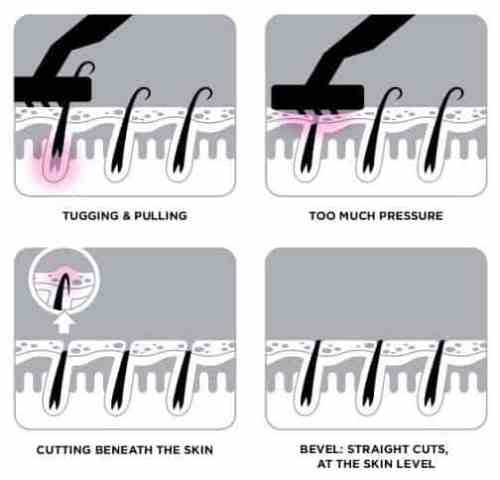

Shaving techniques to prevent ingrown hair on vagina - Shave with sharp single-blade razor
- Don’t stretch your skin taut as you shave
- Don’t pull the shaver forcefully against the skin
- Shave in the direction of your hair growth
- Shave with as fewer strokes as you can to avoid irritating the skin
- Rinse the blade with water after every stroke [or at least occasionally]
- Don’t cut the hair too close to the skin. hold the shaver slightly away from the skin
- Carry out a post-shave care: rinse your skin and apply lotion after shaving.
- Don’t shave your genital hair too frequently. Give the skin time to heal in from irritation from the previous shaving.
2. Other Measures That You May Need To Take
- Exfoliate your vaginal area frequently, especially after hair removal. Also, exfoliate as in begins to regrow tease up any trapped hair.
- Opt for alternative hair removal methods that irritate your skin less.
- Go for long-term hair removal options such as laser hair removal, depilatory creams (e.g Neet or Nair) and electrolysis method.
- Use appropriate body care products
- Avoid tight-fitting pants and underwear, especially after shaving.
- Use preventive medications
- Use creams that decrease hair growth
When to See a Doctor
You may need to visit your doctor in case your ingrown hair is causing you distress. Your doctor will be able to afford you appropriate advice, diagnosis and treatment. Visit the doctor in case:
- The ingrown hair on your vagina is causing distress because it is very itchy or painful
- The symptoms are not getting better or don’t go away within two weeks
- You suspect that ingrown hair is infected by signs and symptoms it presents
- You suspect a different vaginal condition could be causing the signs and symptoms
- ingrown hairs often show up on your vagina (vulva labia or around the vaginal area)
- You have thick hair on your genital area and you associate it with your ingrown hairs
Sources and References
[showhide type=”links” more_text=”Show Sources and References” less_text=”Hide Sources and References”]
- What Can I Do To Rid Vaginal Ingrown Hair? https://www.liveabout.com/what-can-i-do-to-rid-vaginal-ingrown-hair-1716834
- Ingrown Hair: https://www.webmd.com/skin-problems-and-treatments/guide/ingrown-hair-causes-symptoms-treatment
- Ingrown Hair: https://www.mayoclinic.org/diseases-conditions/ingrown-hair/symptoms-causes/syc-20373893
- How To Prevent Ingrown Hairs: http://asmoothlife.com/how-to-prevent-ingrown-hairs
- Ingrown hairs: https://www.nhs.uk/conditions/ingrown-hairs/
- Ingrown Hair: https://www.medicinenet.com/ingrown_hair/article.htm
- Home Treatment for Vaginal Ingrown Hairs: https://www.livestrong.com/article/132741-home-treatment-vaginal-ingrown-hairs/
- How to Identify and Treat an Ingrown Hair Cyst: https://www.healthline.com/health/beauty-skin-care/ingrown-hair-cyst#see-your-healthcare-professional [/showhide]